...
發表文章
1. Good writing is about telling the truth. (p3)
2. Don't worry about doing it well yet, though. Just start getting it down. (p4)
3. Remember you own what happened to you. (p6)
4. You try to sit down approximately the same time every day. (p6)
5. Becoming a better writer is going to help you become a better reader, and that is the real payoff. (p10)
6. All I have to do was to write a really shitty first draft.( p24)
7. You need to start somewhere. Start by getting something- anything - down on paper. (p25)
8. When I sit down to work on a shitty first draft is to quiet my voices in my head. (p26)
9. I love short stories because I believe they are the way we live. They are what our friends tell us, in their pain and joy, their passion and rage, their yearning and their cry against injustice. -Andre Dubus (p47)
10. Having a likable narrator is like having a great friend whose company you love, whose mind you love to pick, whose running commentary totally holds your attention, who makes you laugh out loud, whose lines you always want to steal. (p50)
11. Now, a person's faults are largely what make him or her likable. I like for narrators to be like the people I choose for friends, which is to say that they have a lot of the same flaws as I . ( p50)
12. ⋯⋯they posses a certain clarity of vision- especially if they have survived or are in the process of surviving a great deal. (p51)
13. Plot grows out of character. If you focus on who the people in your story are, if you sit and write about two people you know and are getting to know better day by day, something is bound to happen.
Characters should not, conversely, serve as pawns for some plot you've dreamed up.
Let what they say or do reveal who they are,and be involved in their lives, and keep asking yourself, now what happened? The development of relationship creates plot. ( p54-55)
14. John Gardner wrote that the writer is creating a dream into which he or she invites the reader, and that the dream must be vivid and continuous. (p57)
15. Drama is the way of holding the reader's attention. The basic formula for drama is setup, buildup, payoff- just like a joke. The setup tells us what the game is. The buildup is where you put in all the moves, the forward motion, where you get the meat off the turkey. The payoff answers the question, why are we here anyway? What is it that you've been trying to give?(p59)
16. Alice Adams said that sometimes she uses a formula when writing a short story, which goes ABDCE, for Action, Background, Development, Climax, and Ending. You begin with action that is compelling enough to draw us in, make us want to know more. Background is where you let us see and know who these people are, how they've come to be together, what was going on before the opening of the story. Then you develop these people, so that we learn what they care most about. The plot - the drama, the actions, the tension-will grow out of that. You move along until everything comes together in the climax, after which things are different for the main characters, different in some real way. And there is the ending: what is our sense of who these people are now, what are they left with, what happened, and what did it mean? (p62)
17. If you are a writer, or want to be a writer, this is how you spend your days- listening, observing, storing things away, making your isolation pay off. (p66)
18. Each character must sound different from the others. And they should not all sound like you; each one must have a self. (p66)
19. Every room gives us layers of information about our past and present and who we are, our shrines and quirks and hopes and sorrows, our attempt to prove that we exist and are more or less okay. (p74)
20. Writing is about learning to pay attention and to communicate what is going on. (p97)
21. If you start to look around, you will start to see. ( p101)
22. When a more or less ordinary character, someone is both kind and self-serving, somehow finds that place within where he or she is still capable of courage and goodness, we get to see something true that we long for. (p106)
23. If you don't believe in what you are saying, there is no point in your saying it. (p106)
24. To be a good writer, you not only have to write a great deal but you have to care. You do not have to have a complicated moral philosophy. But a writer always tries, I think, to be part of the solution, to understand a little life and to pass this one. (p107)
25. Write about the things that are most important to you. (p108)
26. If you don't know which way to go, keep it simple. (p115)
27. I don't think you have time to waste on someone who does not respond to you with kindness and respect. (p170)
28. Writing is about filling up, filling up when you are empty, letting images and ideas and smells run down like water- just as writing is also about dealing with the emptiness. (p170-171)
29. Life is like a recycling center, where all the concerns and dramas of humankind get recycled back and forth across the universe. But what you have to offer is your own sensibility, maybe your own sense of human or insider pathos or meaning.
Everything we need in order to tell our stories in a reasonable and exciting way already exists in each of us. (p181)
30. Old uncle Jesus said, " If you bring forth what is inside you, what you bring forth will save you. (p199)
31. Writing takes a combination of sophistication and innocence; it takes conscience, our belief that something is beautiful cause it's right. To be great, art has to point somewhere. (p205)
32. Becoming a writer is about becoming conscious. When you're conscious and writing from a place of insight and simplicity and real caring about the truth, you have the ability to throw the lights on for your reader. He or she will recognize his or her life and truth in what you say, in the pictures you have painted, and this decreases the terrible sense of isolation that we have all had too much of.
33. Don't be afraid of your material or your past. Be afraid of wasting any more obsessing about how you look and how people see you.
If something inside you is real , we will probably find it interesting, and it will probably be universal. (p225-226)
34. This is what separated artists from ordinary people: the belief, deep in our hearts, that if we build or castles well enough, somehow the ocean won't wash them away. I think this is a wonderful kind of person to be. (p231)
35. How alive am I willing to be? (p236)
喜歡這篇文章再幫我點左邊按鈕分享給朋友囉!
- 取得連結
- X
- 以電子郵件傳送
- 其他應用程式
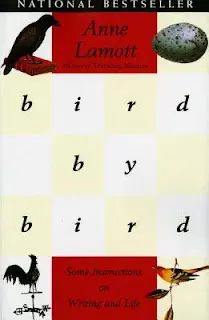
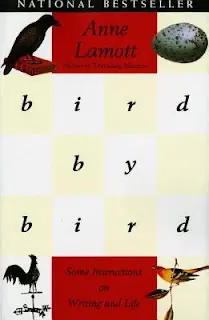
Anne Lamott 所寫的 <<Bird by Bird:Some Instructions on Writing and Life>>(中文翻譯<<寫作課:一隻鳥接著一隻鳥寫就對了!>>)是一本給有志從事寫作的人,一些建議和鼓勵的書,同時也告訴寫作者,出版自己的作品,未必是一切的解答,寫作本身才是自己的救贖。寫自己在意的事情,寫自己的童年和回憶,每個人都有自己對生命和生活的獨特領悟,以及自己的處事哲學。誠實地寫,反正沒有人會看到,持續地寫,坐在書桌前夠久,就會有文字跑出來,不用在意初稿寫的好不好,你可以回去修改。重要的是現在就開始。
...
書名之所以取做 Bird by Bird,是因為作者的哥哥小時候要交一份有關鳥類的報告,拖延了三個月的時間,遲遲沒有動筆,到了截止日的前一天,她哥哥焦慮到快哭了。作者的作家爸爸對她哥哥說:「一隻鳥接著一隻鳥,夥伴。只要一隻鳥接著一隻鳥,按部就班地寫。」我發現這個小故事不只適用於寫作,對於在追求目標和夢想的過程,都是很好的建議,不要去想為了達到目的地還要走多路,只要專注腳下這一步,左腳、右腳、左腿、右腿,一腳一腳地跨出去,走就是了。寫作也是這樣,不要去想要去寫一本幾萬字的小說,而是想著每天寫三十分鐘、或一小時,二頁或三頁,每天完成該寫完的份量就可以,把固定寫作變成習慣,才是能長久寫下去的法則。不要想著初稿就要寫出完美的傑作,能讓自己滿意的句子,可能是在寫了好幾段、甚至好幾頁才會出現,初稿是為了第二稿、第三稿而寫,不求一次搞定,而是多次地修改、潤飾才能接近自己理想中的樣子。
作者的建議之中,讓我最想試試看的是從「人物開始」寫起這件事,我之前都會為了要寫什麼樣的故事而感到很頭痛,我覺得我沒什麼故事可說,但作者卻說從發展人物開始,把人物寫得有血有肉,寫得對他們有感覺,從兩個人物寫起,讓他們互動,你會開始思考他們的行為舉止,他們對事情的反應,然後才會有故事產生,而不是把故事硬生生套在角色上,讓他們照你的想法走,有生命的人物會有自己獨特的故事。
另外我覺得從書裡也得到了安慰,因為作者提到了她出版時的焦慮,對其他人的嫉妒和對自己的懷疑,這些情緒常常在我的心裡翻攪,尤其是焦慮和不安的感受,每一次的投稿,等待回應的過程是如此的漫長,一天之內多次查看信箱,沒有任何消息,然後有一天好不容易等到了回覆,卻是被拒絕的答案,信心大受打擊,懷疑自己是否根本就不該繼續寫下去,但放棄寫作,自己就什麼都沒有了的想法,給了自己寫下去的動力,然後再繼續投稿,然後不斷地重複上述的過程。不過即便像作者已經出書多次,但她一樣也有這些焦慮不安、嫉妒和懷疑,所以稿子被刊登或甚至出版並不是解決這一切負面情緒的答案,當然被肯定的當下會感受到極大的喜悅,但過不久日子又回到了本來的樣子,你還是要坐在書桌前,面對文字,面對下次的壓力。
或許比較好的作法是把寫作當成一種自我療癒,探索自我的過程,不是為了別人,是為了自己,因為孤獨所以寫,因為悲傷所以寫,因為想不通某些事情,所以透過書寫來釐清想法,或者因為記憶不總是可靠,所以靠文字來記錄生活的點滴。說到底,沒有人逼我們非寫不可,就如同村上春樹所說的,「基本上,對創作者來說,動機是是確實在自己心中安靜存在的東西,不應該向外部求取什麼形式或基準。」若是寫作不能給自己帶來某種意義,就沒有非如此做的理由不是嗎?
喜歡這篇文章再幫我點左邊按鈕分享給朋友囉!
- 取得連結
- X
- 以電子郵件傳送
- 其他應用程式
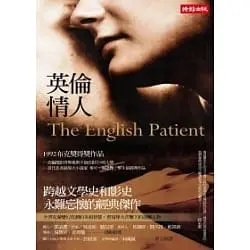
麥可•翁達傑的小說 <<英倫情人>> 獲得1992年曼布克獎,更在今年拿下「金曼布克獎」,被視為曼布克獎歷年來最佳小說。<<英倫情人>> 內容描述在二戰末期,護士漢娜自願留在一幢廢棄別墅照顧一個「英國籍」燒傷患者,這也是書名取名為<<English Patient>>的原因。後來小偷卡拉瓦喬、工兵吉普先後來到別墅,四個人避居這屬於他們的一方天地,試圖在亂世中找到些許平靜。
漢娜和吉普的愛情可以和英國病人跟凱薩琳之間的愛情做對比,前者是精神式的愛戀,著重心靈的交流,漢娜和吉普是彼此的救贖,而英國病人和凱薩琳之間的愛情是肉體的強烈吸引,帶著毀滅彼此的力量。
...
二十歲的漢娜,在戰爭期間因為目睹太多的死亡,內心感到疲憊,尤其在父親也死亡之後,她找不到回到一般生活的理由,於是在其他人都搬到較安全的地點之後,她選擇留在原處照顧那個全身被燒傷的英國病人。沒有人知道英國病人在過去發生了什麼事,也不知道他到底是誰。漢娜把神秘的英國病人當成自己精神的支柱,稱他為「聖徒」,照顧他的方式近乎虔誠,漢娜對英國病人的愛可被視為宗教式的神聖之愛。
另一方面,漢娜和吉普之間的柏拉圖愛情,是因為漢娜和吉普懷有相似的人道主義精神。身為護士的漢娜照顧了許許多多的病患,而吉普每天身犯險境在各地拆除炸彈,為的也是能解救更多人的生命。他們是兩個同樣看見太多死亡的靈魂互相取暖,在夜晚緊緊依靠彼此的身體,擁抱生命的脆弱,證明自己還存在。
國籍和身份是小說中的另一個主題,卡拉瓦喬極力解開英國病人的身份之謎,而吉普是印度裔,卻在為英國軍隊賣命。在二戰時,國家主義和民族主義都影響個人的身份認同以及判斷他人是敵是友的標準,此時人們不是服膺一個較高的人道主義或是道德倫理,而是把非自己同一聯盟的人類都當成「非人」對待,用武器全都殲滅。在別墅裡的這群人都受夠了現況的殘忍無情,所以他們會圍在英國病人的病床旁邊,聽他講自己在沙漠的經歷,他所述說的故事帶領其他人進入了那個世界,帶領著他們尋求自己的靈魂。在沙漠中沒有國與國之間的對立和仇恨,國籍和身份在這也不重要。他們在他的故事中沈醉,遁逃到過去而不用面對現在的淒慘景況。
眾人避世的天地,最終因為掉落在日本的核彈而結束了,吉普終於明白為什麼他哥哥會拒絕為英國人服兵役,他從核彈中看見了白人的邪惡,他開始正視自己是印度人的事實,他回到印度當醫生,並且結婚生子,他有時會想起漢娜。
喜歡這篇文章再幫我點左邊按鈕分享給朋友囉!
- 取得連結
- X
- 以電子郵件傳送
- 其他應用程式
在真正動手寫這篇文章前,我順手拿起身旁的小鏡子照了照,又看了一下文件㚒裡的其它文章,瀏覽網頁,大約十五分鐘過去才下定決心動工。我想我又犯了拖延的毛病,每次在寫文章前都會東摸西摸,就是不肯快點進入寫作狀態,即使我已經寫了六年的部落格,還是改不了這個壞習慣。會談到這件事,是因為和我今天想要分享的這本書有關: <<How to Be an Artist Without Losing Your Mind, Your Shirt, or Your Creative Compass>>作者是JoAnneh Nagler,中文版書名為<<藝術家的正職>>。這本書告訴大家如何安排時間,在繁忙的行程和工作之餘,仍然可以創作自己的藝術,並且不致於過著窮困潦倒,懷疑自我的生活。
...
喜歡這篇文章再幫我點左邊按鈕分享給朋友囉!
- 取得連結
- X
- 以電子郵件傳送
- 其他應用程式